


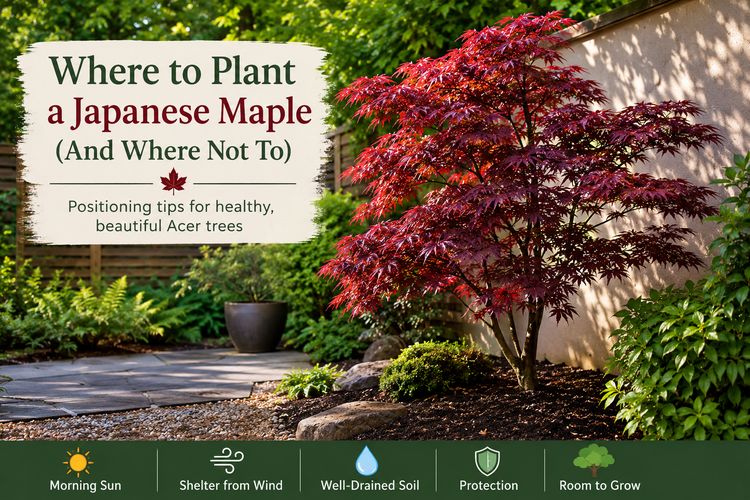
Where to Plant a Japanese Maple (And Where Not To)
3rd Jun 2026
It’s usually straightforward. See a plant. Buy a plant. Plant a plant. And if you’re shopping for a Japanese maple, you’ll definitely see loads of plants you’ll want in your garden. You’ll be spoilt for choice. But the question of which plant to buy can be easier than deciding where to plant it. Because, if there is one mistake some of us make when planting a Japanese maple, it isn't choosing the wrong variety. It isn't watering too much or too little. And it certainly isn't buying an Acer in the first place because there is no such thing as a bad Acer.
The biggest mistake is planting it in the wrong place.
Japanese maples may look very delicate, but the truth is they're actually quite reliable when their growing conditions suit them. Unfortunately, many Acer problems that appear later, such as leaf scorch, poor growth, or lack of colour, can often be traced back to where the tree was planted in the first place.
So, if you’re planting a Japanese maple you do need to have a bit of a think about exactly where in the garden you are going to plant it. That said, the good news is that positioning an Acer correctly isn't complicated. Once you understand what these beautiful trees like and dislike, you're more or less there.
Why Position Matters So Much
Unlike many trees, Japanese maples aren't particularly adaptable to extreme conditions. They generally dislike:
- Strong winds.
- Very exposed positions.
- Waterlogged soil.
- Intense afternoon sun.
- Frost.
Plant an Acer somewhere unsuitable and it will spend its life struggling. Plant it somewhere that suits its natural preferences and it will reward you with years of spectacular foliage and elegant growth.
If you haven't already, it's worth reading our complete guide to Japanese maple trees for UK gardens, which covers Acer varieties, planting, care, and growing conditions in more detail.
The Ideal Position for a Japanese Maple
If you could design the perfect location for an Acer, it would probably include:
- Shelter from strong winds.
- Exposure to the morning sun.
- Light afternoon shade.
- Well-drained soil.
- Protection from extreme weather.
This combination allows the tree to enjoy plenty of light while avoiding the harshest weather conditions that can damage its delicate foliage.
Many gardeners worry that Acers need deep shade, but this isn't usually true. Most varieties actually appreciate sunlight, just not the intense midday sun that can cause leaves to scorch during hot weather.
Sun or Shade?
This is probably the question Acer growers ask most often. The answer is usually somewhere in the middle. Most Japanese maples prefer:
- Full sun in cooler locations.
- Partial shade in hotter, more exposed gardens.
- Dappled shade beneath taller trees.
The goal is to avoid prolonged exposure to intense afternoon sun, particularly during dry periods. Though you may think that given the typical British summer this shouldn’t be too much of a problem.
If you're unsure how sunlight behaves in your garden, our guide to plants for sun, shade, and everything in between explains how to assess light levels properly.
Why Wind Is Often the Real Problem
When gardeners see scorched Acer leaves, they often blame the sun. But often that isn’t the case. In reality, wind is frequently the bigger culprit. Strong winds can:
- Dry out foliage.
- Damage delicate leaves.
- Increase water loss.
- Make leaf scorch worse.
This is why Acers often thrive near:
- Fences.
- Garden walls.
- Larger shrubs.
- Sheltered borders.
A little protection goes a long way.
Planting Acers Near Walls and Buildings
Walls can create excellent growing conditions for Japanese maples. They provide:
- Shelter from wind.
- Protection from extreme weather.
- A neutral backdrop that highlights the plant’s colour.
However, do make sure you avoid planting your Acer too close to walls where rainfall can't easily reach the roots. Leave enough space for:
- Future growth.
- Air circulation.
- Root development.
Remember that even compact Acer varieties become larger over time.
If you're still deciding which Acer might suit your garden best, our guide to the best Japanese maple varieties can help narrow down your options.
The Best Soil for Japanese Maples
Position and soil work together. Most Acers prefer:
- Moist but well-drained soil.
- Slightly acidic to neutral conditions.
- Soil that doesn't become waterlogged.
Heavy clay isn't necessarily a problem if drainage is reasonable, while very sandy soils may require extra organic matter to help the roots retain moisture.
If you're not sure what type of soil you have, our guide to understanding your soil can help you identify it and choose your plants accordingly.
Where Not to Plant an Acer
Sometimes it's easier to think about what to avoid. Try not to plant Japanese maples:
- In exposed windy positions.
- In permanently waterlogged ground.
- In deep, dense shade.
- Against south-facing walls that become excessively hot.
- In frost pockets where cold air settles.
None of these conditions automatically mean failure, but they make success much harder.
Growing Acers in Pots
Containers offer more flexibility when it comes to positioning. You can:
- Move the Acer if the conditions aren't right; or you just fancy a change.
- Protect it from extreme weather by moving it a more sheltered position.
- Adjust sunlight exposure throughout the year.
These are all reasons why Japanese maples have become so popular for patios and smaller gardens. You see so many Acers in pots nowadays.
If you're planning container growing, our guide to growing Japanese maples in pots explains everything you need to know.
Match the Position to the Variety
Different Acer varieties tolerate conditions slightly differently. For example:
- Red-leaved varieties often appreciate some protection from intense sunlight.
- Green Acers can sometimes tolerate a little more sun.
- Laceleaf varieties often benefit from extra shelter.
This is why choosing the right variety is just as important as choosing the right location.
If you're still deciding which Acer to plant, our guide to the best Japanese maple varieties can help narrow down your options.
Final Thoughts
Positioning a Japanese maple correctly is one of the easiest ways to ensure the long-term health of the plant. You don't need specialist knowledge or complicated gardening techniques. Simply provide shelter, reasonable sunlight, well-drained soil, and enough room to grow.
Get those basics right and your Acer will reward you with beautiful foliage, elegant structure, and spectacular seasonal colour for many years to come.
Explore Our Range of Acer Trees
Whether you're looking for a compact Acer for a patio, a striking red-leaved variety for a border, or a graceful laceleaf specimen as a focal point, you can browse our full range of Acer trees on the Direct Plants website.
With a wide selection of Japanese maples available, there's an Acer to suit almost every garden.