


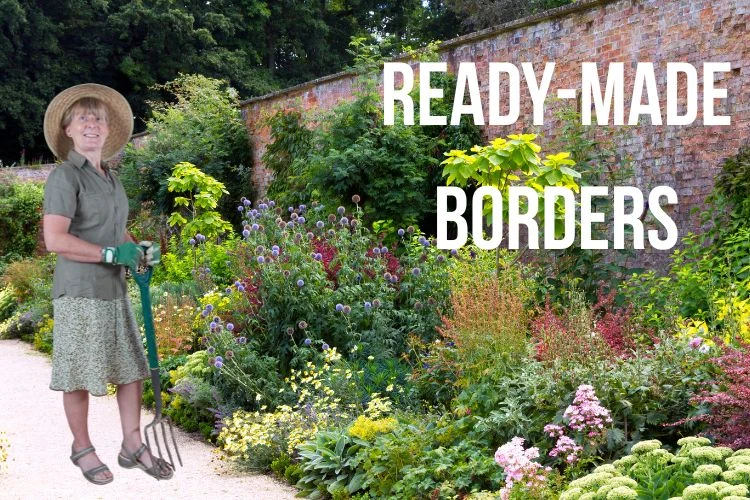
Ready-Made Garden Borders: The Easy Way to Create an Instant Garden
19th Oct 2026
It's always a joy to plant a new border, or to renovate one that is looking desolate and unkempt. When you look on a lovely patch of freshly prepared soil, you'll have a completely blank canvas and, of course, the freedom to plant whatever you like.
But that can be a little confusing. You have to decide what to plant in it. All of a sudden it becomes a little more complicated.
Which plants do you need? Which should go at the back? What about the front? What goes where? Which colours work best together? Do all the plants you've chosen like the same conditions? Will everything flower at exactly the same time and then leave you with a rather dull border for the rest of the year?
So many questions and, before long, that lovely blank canvas starts to feel more like an exam question. One that you haven't really revised for. But don't worry, there is a quick and easy way to answer all those questions. Ready-made garden borders.
Rather than choosing every individual plant yourself, a ready-made border collection brings together plants that have been selected by experts to work together as part of a new planting scheme.
All the plants you need chosen and sent to you. It takes the planning and prep work out of the task but you still get to do the fun parts. You still get to plant them, arrange them, and watch the border develop before your eyes. Ready-made border collections simply mean you don't have to do quite as much head scratching beforehand.
And if you're trying to create an established-looking garden quickly, they fit perfectly into the idea of instant impact gardening.
What Is a Ready-Made Garden Border?
A ready-made garden border is a collection of plants selected to grow together and create a coordinated planting scheme without you having to choose every plant individually. It saves you time and money.
Collections may contain shrubs, perennials, and other garden plants chosen to provide a mixture of:
- Heights.
- Colours.
- Flower shapes.
- Foliage.
- Textures.
- Seasonal interest.
And there are a huge range of ready-made border collections to choose from. Some collections are based around a particular colour scheme, while others are designed around a garden style, growing condition, or position within a border.
The idea is simple. Instead of starting with six, ten or twenty individual plant decisions, you start with one larger decision:
What kind of border do I want?
Once you've answered that, much of the difficult plant selection has already been done.
Why Is Designing a Garden Border So Difficult?
It isn't the actual planting that's difficult. After all, most of us are perfectly capable of digging a hole. We can even get them in the right place occasionally.
The tricky part is choosing plants that will still look good together several months or even years after you've planted them.
When we're buying plants individually, it's very easy to choose them based on what looks best at that particular moment.
We've all done it. You see something covered in flowers and immediately decide it needs to come home with you. But do that five or six times and you can end up with a collection of nice-looking plants that don't necessarily make a particularly good border.
They might all be roughly the same height. They may all flower at the same time. Their colours might clash. Or perhaps you've unknowingly selected plants that prefer completely different growing conditions yet you're going to plant them all in the same space.
A successful border needs more than nice individual plants. It needs the plants to work together.
What Makes a Good Garden Border?
A good garden border combines different heights, shapes, colours and textures while giving each plant enough space to grow and providing growing conditions which suit every plant.
You don't need complicated garden design qualifications to achieve it. The basic principles are pretty easy to grasp.
A balanced border will usually contain some variation between:
- Taller structural plants.
- Medium-height shrubs or perennials.
- Lower-growing plants.
- Different leaf shapes and foliage.
- Flowering periods.
- Evergreen and deciduous plants.
The aim isn't to create something that looks like it was designed by a shop window display guru. Borders look more natural when they aren't perfectly symmetrical or regimented.
What you're trying to avoid is everything becoming one height, one shape, or one block of colour. Variation in the type and colour of the plants is what gives a border depth.
Why Choose a Ready-Made Border Collection?
The biggest advantage of a ready-made border is that it removes much of the guesswork from choosing plants that work well together.
That makes them particularly useful for newer gardeners, but they're certainly not only for beginners. We can all benefit from someone else's hard work. And even experienced gardeners sometimes want a quicker solution.
Perhaps you've created a completely new bed and need a large number of plants. Maybe you're renovating part of the garden and don't want to spend hours selecting individual varieties. Or perhaps you know the look you want but simply don't know which plants will create it.
A ready-made collection gives you a starting point. And, of course, you can always add other plants later.
Ready-Made Borders Will Give Your Garden Instant Impact
One of the biggest problems with newly planted borders is that they look empty while you wait for nature to take its course.
You've done all the hard work. You've prepared the soil. All the plants have been planted. You step back and… there is a lot of brown earth between the plants.
That's perfectly normal. Plants need space to grow. But if you'd rather your border looked more established from the beginning, starting with the larger, more mature plants you find in ready-made border collections can make a significant difference.
Direct Plants' ready-made garden border collections use established plants rather than tiny plug plants, helping to create more presence from the outset.
That doesn't mean the border is instantly finished. The plants will still grow, spread, and develop over the coming seasons. You're simply starting further along the journey rather than being at the starting line.
Choose a Border by Colour
Colour is probably the first thing most of us think about when imagining a new border. Some gardeners love bold reds, oranges, and yellows. Others prefer softer pinks, blues and lilacs.
Then there are people who'll happily tell you that nothing beats the simplicity of green foliage and white flowers.
None of these ideas are wrong.
Choosing a ready-made border by colour is an easy way to create a planting scheme that feels like a coordinated display rather than a random collection of plants.
A limited colour palette can help bring quite different plants together visually. Cool blues, purples, and pinks can create a relaxed feel. White and green can look fresh and elegant. Reds, oranges, and yellows create something much bolder and more energetic.
You don't have to match every plant perfectly. The aim is simply to create a colour relationship that looks stunning but as natural as nature never really intended.
Think About Height: Front, Middle, and Back
One of the easiest ways to make a border look established is to use several levels of planting.
As a general rule:
Taller plants go towards the rear, medium-height plants fill the middle, and lower-growing plants soften the front edge.
It's not rocket science, is it?
The important thing is to avoid creating one flat line of plants all at exactly the same height.
Don't Be Afraid to Repeat Plants
There's another common mistake when filling a new border. We want one of everything.
It's understandable. There are so many lovely plants to choose from that we want to squeeze in as many different ones as possible.
But repeating plants can make a border look much more convincing. Just think how plants are displayed in a garden centre. All varieties grouped together and they look amazing.
Repetition helps connect different parts of a border and makes the planting feel planned rather than accidental.
How Many Plants Do You Need for a Garden Border?
That's like asking how long is a piece of string?
There is no set answer or rule because it depends on the size of the border and the mature spread of the plants.
The most important thing is not to assume that more plants automatically mean a better border. Plants grow, so always allow space for them to spread.
Often, you won't need as many plants as you first imagine.
Can You Add Your Own Plants to a Ready-Made Border?
Of course. A ready-made border isn't a set of gardening rules that you're forbidden to break. It's a starting point.
Add your favourites or latest discoveries. It's your garden after all.
When Is the Best Time to Plant a New Border?
Container-grown plants can generally be planted through much of the year, provided the ground isn't frozen, waterlogged, or exceptionally dry.
Of course, most of us will plant in spring, but do remember you're not restricted to that time of year.
Final Thoughts
There will always be gardeners who love planning every individual plant in a border. And if that's your jam, it's fine. Nothing wrong with that.
But not everybody wants to.
Sometimes you just want a nice-looking border without turning the whole thing into a major design project.
If that's you, ready-made border collections are the obvious and perfect choice.
Explore Ready-Made Garden Borders
Whether you're creating an entirely new bed, refreshing an old border, or simply want to take some of the guesswork out of choosing plants, you can explore our full range of ready-made garden border collections at Direct Plants.
With established plants selected to work together, it's a simple way to give a new border a much more coordinated and established appearance from the start.